

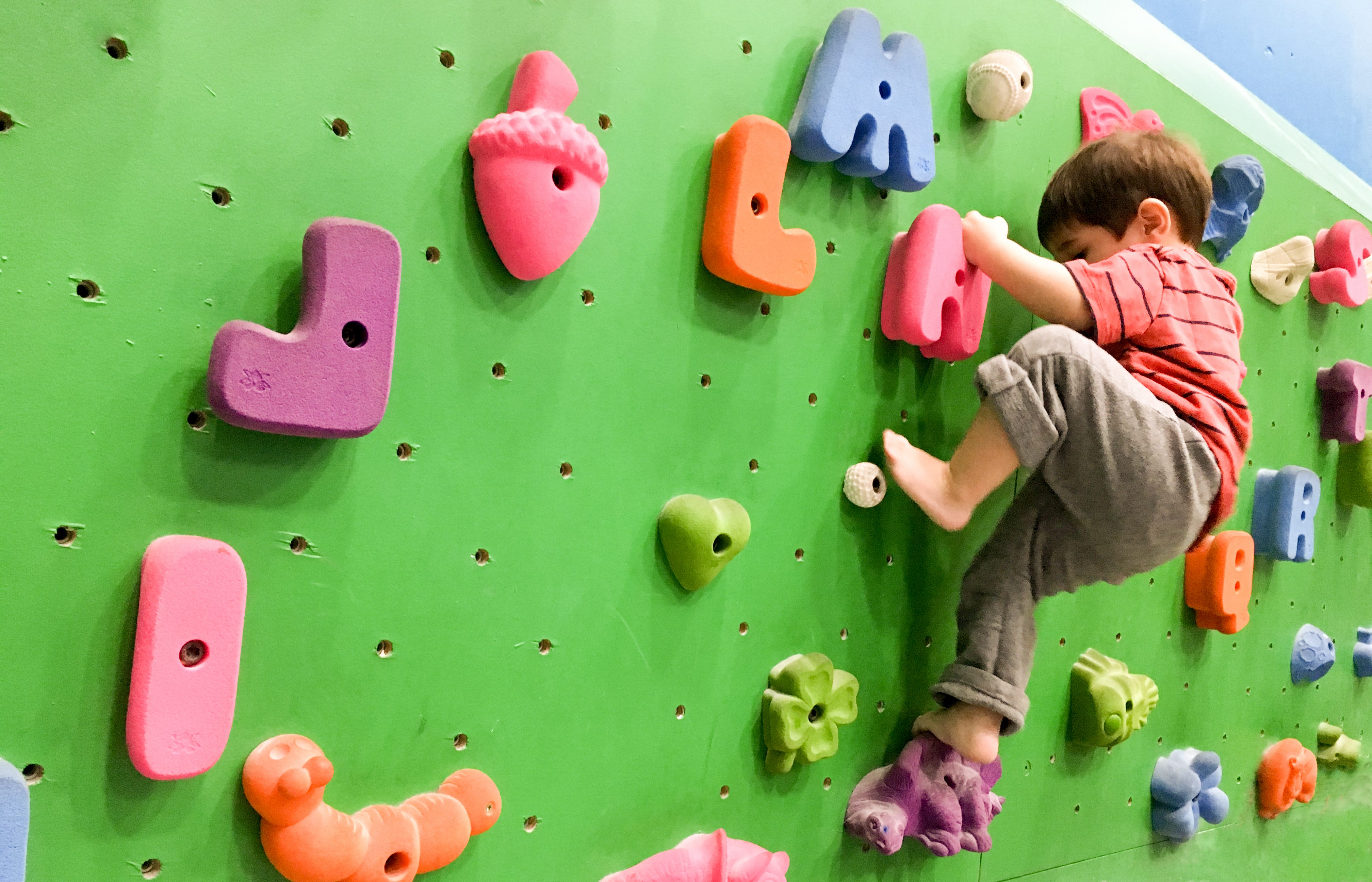
When I was a teenager, my father took me to Idyllwild, in the mountains above Palm Springs, to a granite monolith called Tahquitz.
We hiked in under a canopy of pines and up long slopes of talus, the broken granite the mountain had been shedding for longer than anyone can count, hauling heavy climbing gear on our backs to the foot of the rock.
Multi-pitch climbing has a simple rhythm. One climber leads, climbing until they can build an anchor, sometimes a hundred feet or more above the other. Then, anchored in, they belay the second climber up. A belay is not a pull. You never haul on the rope, because one tug at the wrong moment can pull the climber off the rock. You only take in the slack as they climb, keeping the line just snug. Every extra foot of slack is another foot of fall, and every foot of fall puts more force on the anchor. Then you do it again, pitch after pitch, up the face.
The anchors have to be strong enough to hold both of you, because on a wall like that, an anchor that fails kills everyone tied to it. Climbers have a word for the worst of it, when the protection rips out of the rock one piece after another, each failure loading the next. They named it for the sound it makes. Unzipping.
The route that day was called Sahara Terror. Seven hundred feet of mostly vertical granite, the kind you have seen in photographs of Yosemite, in full sun by afternoon, which is probably where the name comes from. It is the rock where the climbers who would go on to open the great walls of Yosemite learned their craft.
A few hours in and hundreds of feet up, my father was another hundred feet above me, anchored in and out of sight. I followed on the rope, slowly, trying to find the holds he must have used. Fingertips on flakes of granite. Fingers jammed into cracks. Body pressed close to the wall to keep my weight over my feet, where the sticky rubber of my shoes could hold.
Somewhere near the top of the third pitch, maybe the fourth, with nothing below me for hundreds of feet, I froze.
I could not find the next hold. There was nothing. My arms ached and my legs shook. I could not go down and I could not go up.
It was silent except for the wind. I was alone on the wall. I don’t know how long I stayed there. It felt like forever. I started to cry.
Then, faint, from somewhere above, through the wind:
“James! You okay?”
I hesitated. Then I shouted back, “I can’t see it. It’s all smooth. I’m stuck!”
It was. Everywhere I looked, smooth rock. Everywhere I reached, I felt nothing, like someone patting a dark wall for a light switch that isn’t there, except that this was in full daylight. I ran my hands over the granite again and again. Not even a flake.
I.
For a year, I believed the next conversation would be the one.
Every promise sounded reasonable, and every delay came with a reason. Next month. After this quarter. Once things settle. I did the work in the meantime, because that is what you do when someone you respect asks you to help build something. I gave it my nights and my weekends. I gave it my judgment, which is the only thing I have ever really had to give. And each time the moment came to act on what we could both plainly see, it passed, quietly, like a train passing a station it was never going to stop at.
The hard part was never the work, or even the money. It was the slow discovery that I was the only one still waiting for that conversation. Everything I needed was waiting in it: whether the work mattered, where I stood, where to go next. What I had instead were reassurances, and I built on them, until the day I put my weight on one and understood it had never been meant to hold any. Betrayal is too sharp a word for it, and disappointment too small. It is closer to grief: for the thing I was building, and for the version of myself who kept believing it would be built.
Eventually the cost of hoping outgrew the cost of starting over. The next path was no clearer. I simply could no longer tell whether the next room would be any different from the last, and the only thing still mine to decide was which door I walked through.
So I decided to leave. I said it out loud, alone in the car, and for a moment the air in my chest felt different.
Then I reached the first gate.
I would look for the next thing while I finished this one. That was the sensible plan. But finishing this one took everything I had. Looking for work is a job in itself, and I already had two: the one I was paid for, and the one where I held everything together. The evenings I set aside for my own future went to someone else’s emergency. And strangely, I kept doing the work well. Doing it badly was the one thing I would not let them take from me. So the disappointment built quietly, and so did the calendar.
Fine. I would make the time. But first I would save.
The second gate was money. It was never the leap that frightened me. It was the gap between the last payment and the first, the stretch of open air where nothing holds you up. People depend on me, and I depend on myself, which is a different weight and no lighter. In the country where I live, a bank reads only one kind of income, the kind a signed contract promises, and the kind I had spent the year earning barely counted. I ran the numbers at two in the morning, and they came out the same as they had at midnight. A cold feeling settled into my bones and did not leave.
Fine. I would not jump. I would climb down carefully, with a clean story in hand.
Except there was no clean story. I do not discuss former clients. It is the most honest sentence I own, and it is the one that sounds most like I am hiding something. I would carry the truth of that year in silence, and silence looks like guilt.
Fine. Then the answer was not a new client. It was a new direction.
Because I had noticed something I did not want to notice. This had happened before. A different name, a different building, the same shape. The promise that became a misunderstanding. The decision that was always one conversation away. The rhymes went back further than I wanted to count, and they always ended at the same thought: that the common factor in every one of those rooms was me. Changing clients would not fix that. I would only be choosing the next room with the same furniture.
So I looked at changing everything, and the new field had its own gates. It wanted a track record, and mine was six essays and a conviction. Everything I knew counted for nothing at the new door, because none of it had been earned there. And under all of it was the question I could not answer: what if I spent the years, and the money, and it led somewhere no better than here?
Fine. I would start anyway. The work would speak for itself.
Then the news came on. Hiring frozen. Layoffs at companies that were growing last year. Every kind person says the same thing at a time like that: hold on to what you have. It was the worst possible time. It is always the worst possible time.
My body started sending invoices of its own. Sleep that restored nothing. A jaw that was tight by noon. The energy I had at thirty, or at forty, is not coming back on request. I am fifty-three.
And then the machine. I knew better than most what it was about to do to the trade I had practised for thirty-five years, because I had spent the past year writing about it. The gasoline on this fire was mine.
And then the last gate. It was quiet, and it was the worst one, because it spoke in my own voice.
Maybe it’s me.
Maybe they were right not to listen. Maybe I am the common factor. Maybe everyone else knows something I don’t, and I have only been better than most at hiding it.
I had just spent a year watching what a gate protects, from the inside. I had been invited through one gate to help someone through another, one they had told me mattered. Good advice landed on a desk and stayed there. A person who could see the path as plainly as I could chose, every time the moment came, not to walk it. When the person you came to help will not take the step, you cannot take it for them. I could not go forward, and I could not go back. There was a wall in front of me and a gate at my back.
It was never that I could not climb. I was tied to someone who would not.
The gates were not broken. They were working exactly as built, and they had been working for a very long time.
I counted every one of those gates, standing in the doorway. None of them had moved. I had not built a single one of them.
I walked through anyway.
II.
The first morning felt like courage.
I woke without the old dread sitting on my chest. I made coffee slowly, because I could. For a few hours the decision felt like the bravest and clearest thing I had done in years.
By the afternoon, the quiet had a different sound.
Nobody needed me. No messages, no emergencies, nobody waiting on my answer. For a year I had wanted exactly this, and now that it was here, it did not feel like rest. It felt like being erased. I checked my phone more than I would admit.
By the end of the first week, the fear of change had become the cost of change, and the cost was no longer an idea. It had a number, and the number arrived on a date. I watched the account the way I once watched a sick child sleep, without blinking. Every purchase became a small negotiation with the future.
I started to dread the simplest question anyone can ask. So, what do you do? I had answered it without thinking my whole adult life. Now I caught myself rehearsing. I’m building something. I’m between things. I’m working on a new direction. Each version was thinner than the one before, and I knew what the face across from me would do with it, something small and polite, as I was moved from one category to another. I had been someone. Now I was a situation.
The hardest questions did not come from strangers, or the market, or the gatekeepers. They came from my own table, and I could hear them before anyone said them, because I would have asked them myself. Are you sure. What about the children. Couldn’t you find something steady first. What will you tell people. They came from love, which is why they cut so deep.
It took me a while to see that they were not really questions about me. The people at my table know me. They have watched me carry heavy things for years without dropping them. What was speaking through those questions was older than any of us: the institution, the norm, the culture that taught all of us the same lesson. You hold on. You don’t make trouble. You leave one job only for another. You don’t step outside the line where everyone can see you. The gates I had counted had tenants, and some of them lived inside the people I love.
You cannot argue with someone’s fear for you without seeming to argue against their love. So I defended the decision instead. At breakfast. On the phone. In the shower, building a case like a lawyer for a client who happened to be me. Every explanation cost something, and nobody refunded it.
Then the questions followed me to bed, and at three in the morning they stopped sounding like other people’s voices and started sounding like mine. What if they’re right. What if this isn’t courage, just the same stubbornness that kept me in the last place a year too long. What if normal is normal for a reason.
There is a morning every year when the season turns, and I stepped outside into it in the middle of October. Nothing had happened yet. The leaves were still on the trees and the sun was still warm on my face.
But the light came in at a new angle, and the air carried a coolness that had not been there the day before, and something in me older than thought tightened without asking permission. Winter is coming. Get ready.
That is what all of it did, every question at the table, every polite face, every number on its date. Each piece was small. Together they changed the air, and the part of me that is older than language read the change the only way it knows how. Danger.
Then the tunnel narrowed. Every email that did not come back was proof. Every quiet day was a sign. Every possibility I had imagined had been a door, and now each one shrank to a pinhole, and through the pinhole I could see exactly one thing: the thing I was afraid of.
I had cleared the studio for this. I had carried out the old work on purpose, swept the floor, and set a blank canvas on the easel. Now I sat in front of it with the brush in my hand, ready to paint the future, and the only colours that came to mind were the fears that held me to the present. The news. The account. The questions at the table. The voice at three in the morning. I did not have to go looking for them. They were already on the brush.
A blank canvas is freedom. It is also the easiest surface in the world for fear to fill.
Somewhere in those weeks I noticed I had stopped telling people what I was building. I wasn’t ashamed of it. I just could not afford what it cost to say it out loud. Then I noticed something worse. I had started saying it more quietly to myself as well. And the voice that took its place did not stop me with a wall. It stopped me with a whisper. Go back. Find a cave, any cave. Even the one you just left.
III.
And then I breathed.
What came next felt like relief, though not the kind that follows a disaster, the trembling gratitude of having survived something. This one had something in it that had not been in the room before. Hope. When the noise finally stopped and I looked up, the gates were all still there. But the walls beside them had thinned, and there were exits nobody had drawn on any map I owned.
I was, it turned out, going to be fine. Not safe. Fine.
I was still on that wall.
A minute went by. Maybe ten.
“…toes!”
“What?”
A pause. Then his voice, distant and small, one piece at a time through the wind: “Stretch! … Get up … on your toes!”
Breathing was hard. The fear was turning into pain. Tears kept coming, and I kept wiping them away, smearing dirt and chalk across my face.
I closed my eyes. I breathed. I stood still, listening to the wind. Then I got hold of myself, and I did what he said.
My calves tightened, and I stretched my body as high as it would go, up on my toes. The width of a finger, maybe less.
And the entire wall changed.
Suddenly there were holds everywhere. Flakes, cracks, edges, features I had been staring straight past. Everywhere. The smallest shift in perspective, in just one direction, revealed what had been there all along.
Almost all of it was already within reach.
IV.
In a letter this summer I wrote a sentence I have not been able to put down since: AI didn’t add a capability. It removed a constraint. And on the morning after I walked through the door, I published an essay that closed by asking the reader whether they would take the step. I wrote both of those for other people. It took me two weeks to notice that I was the one standing on the wall.
The holds were never the problem. The distance was. And the machine has become very good at taking away distance: to knowledge that used to live inside a building, to the expert I could not afford to ask, to the staff it once took to build anything at all. I have written about that in these essays, and it is why the walls beside the gates have thinned, and why fewer travellers need the keepers.
But there was one constraint it could not touch, and I had carried it up the wall the whole way. The last constraints are not out there. They speak in your own voice, and they are bigger as fears than they are as anything else. Those are the only gates a person has to open alone.
V.
Somewhere there is a sentence someone said to me that I can still hear.
I keep it in a box. A letter, twenty-four years old, that arrived after four years of the best work I had ever done. I asked for it three times. I still can’t read it without flinching. Nothing anyone could say now would make that better, and I have stopped expecting anything to.
This took me twenty-four years to admit. What still hurts is not the letter. It is that I had let myself believe something else.
It is the oldest kind of injury there is. The rug you finally step onto, pulled out from under you. And the quieter injury underneath it: I was the one who chose to step onto it. That is not fair. It was never fair that I had to carry it at all. But it is true, and it was the last gate.
There was a boy on the floor between two library aisles who read until a word stopped him and then went and found it. He never asked anyone whether he was allowed. He did not know permission existed. Everything since has been a lesson in waiting for it.
What I had been waiting at, all those years, was their gate. The permission was never theirs to give.
Leaving was the first step. It wasn’t the step.
Every time I have changed my life, it has taken one decision, and everything else followed. Not a plan. One decision, made, and then the plan came. This autumn I made another one.
I said it out loud, to the person I love more than anything, the one who shares the consequences with me, with the months and the money in front of us. I said it as a man at the age when everyone tells you to hold on, with two children still growing up and a home that counts on me: the work I had done for thirty-five years was drifting away, and I was not going to chase it. I was going to turn toward what I could see coming, and toward the work I believe is mine. Saying it was not the hard part. The hard part was telling the person I promised to protect that I was scared, and asking for her support anyway.
This time, for the first time, I watched myself do it, and I wrote down every reason I reached for along the way, and the machine kept the list, which was the only thing it could do that day. There were a lot of reasons, and every one sounded responsible. If I stop, everything falls apart. Security first, then what I want. Make sure we can pay the bills. Not one of them was about the work. Every one of them was fear, dressed for the table.
What she said is between us.
And then I took the step.
The step is where the hard work starts. The materials still have to be gathered. The thing still has to be built. Gravity still applies. The only thing that changed is that nothing stands between me and the work anymore, except the work.
VI.
Twice this year, someone who never says anything by accident has asked me whether this, the writing and what has grown out of it, is my calling.
I have been turning the word over since. The way it is usually used, a calling is a destination: a place you arrive, a title, a door with your name on it. I don’t think that is what it is. A calling is a path. Finding it is finding the ground your feet already know. The cadence that was yours before anyone handed you another. The purpose underneath the work, which is the reason the work does not feel like work. And the one thing a destination can never give you, because it is spent the moment you arrive: the deep satisfaction of each step.
The path has not changed in thirty-five years. Only its expression has. I chose a service business because I wanted to be useful to people nobody was serving well, and I have never wanted anything else. The expression went from repairing other people’s machines, to the technology behind shops, to the households of people with a great deal to protect, to the strategy of whole companies. And now something has arrived on the path that I did not plan for: a kind of cognition that complements the connoisseur, the tireless part, while the taste stays ours. It has carried me to the people the old physics of life and business could never afford to serve. It may carry all of us out of an ignorance that was never a failing, only our condition, with our taste and our attention waking up.
I know the path by what it does to me. More than once, writing these essays, I have had to stop because I could not see the screen.
I had someone on the rope that day on the wall. Most people never do. There are gates I never had to stand at, and I am not going to pretend I did. Nobody has read my name on a page and closed a door because of it. I have watched my son stand at one of those gates, measured for years against a ruler that was never built for the shape of his mind, and I know how quietly a door can stay shut.
But I know the path best at the dinner table, when my son and I are only talking, and the hundreds of hours I have spent walking it let me ask him the simplest question at exactly the right moment, and then do the hardest thing I know how to do, which is to keep the rope snug and say nothing while he finds the hold himself. The pause that follows is long and thoughtful and entirely his. It is a step on a path that is his, not mine. I could not have asked that question without every hour that came before it.
A calling is not somewhere you arrive. It is a route that was already on the rock, found one hold at a time, with almost all of it within reach of wherever I happened to be standing. I stood frozen in front of mine for a year, in full daylight. Nothing on the rock had moved.
The last gate’s keeper was me.